Emotional Regulation in Tweens Ages 9-12: Understanding the Preteen Emotional Storm
Your preteen is caught between two worlds. They want independence but still need you. They feel emotions with new intensity but lack the experience to manage them. Their body is changing in ways that confuse them, their social world has become a minefield, and they are expected to handle it all with a brain that is mid-renovation. When they slam their door or say "I'm fine" through gritted teeth, they are not being difficult. They are doing the best they can with a system that is fundamentally overloaded.
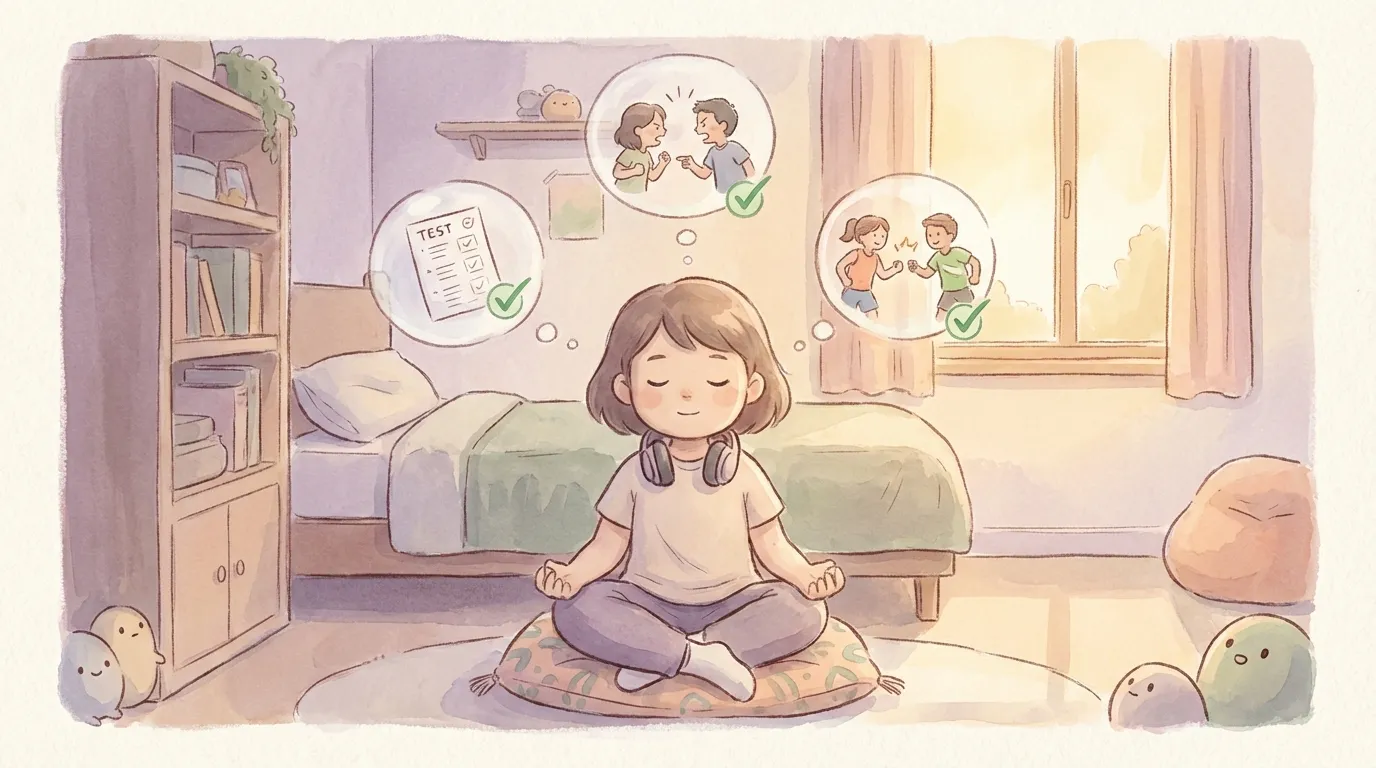
What You'll Learn
- Puberty-driven hormonal changes amplify emotional intensity while the prefrontal cortex is still catching up, making mood swings biological — not behavioral.
- When your tween says "I'm fine," try side-by-side conversations, share your own feelings first, and leave the door open without forcing it.
- Social rejection activates the same brain regions as physical pain at this age, so validate the intensity instead of minimizing it.
- Collaborative problem-solving — asking "what do you think might help?" — works far better than telling tweens what to do with their emotions.
- Teaching repair after emotional ruptures builds the lifelong understanding that relationships survive storms.
How Does Puberty Affect Emotional Regulation in Children Ages 9–12?
Between ages 9 and 12, hormonal shifts amplify emotional intensity while the prefrontal cortex is still maturing. Tweens may say “I'm fine” while clearly struggling, manage emotions well at school but fall apart at home, or experience digital emotional challenges. Building independence in self-regulation while maintaining connection is the key parenting challenge at this age.
The emotional upheaval of the preteen years is not just psychological. It is deeply, fundamentally biological. Between ages nine and twelve, the body begins producing sex hormones—estrogen and testosterone—in increasing quantities, often months or years before any visible signs of puberty appear. These hormones directly affect the brain's emotional processing systems, amplifying emotional reactivity and disrupting the emotional management systems that were beginning to stabilize.
At the same time, the part of the brain that manages emotions is undergoing a massive reorganization. Research by Casey, Getz, and Galván describes this as an “imbalance model”—the part of the brain that generates emotions matures faster than the part that manages them, creating a period where emotional intensity outpaces the ability to handle it (Casey, Getz & Galván, 2008, Developmental Review, DOI: 10.1016/j.dr.2007.08.003).
This means your preteen is experiencing emotions at a higher volume than they have ever felt before, with an emotional management system that is actually less efficient than it was a year or two ago. They are not being dramatic. Their brain is genuinely struggling to process what their body is generating. The good news is that this imbalance is temporary. The bad news is that it does not feel temporary to them. Every hurt, every embarrassment, every frustration feels world-ending because their brain currently lacks the perspective-taking machinery to see otherwise.
When “I'm Fine” Means They Are Not
Preschoolers wear their emotions on the outside. Tweens bury them. Between nine and twelve, children develop the social awareness to know that emotional expression makes them vulnerable—and the self-consciousness to be deeply uncomfortable with that vulnerability. The result is the most common two words in the preteen vocabulary: “I'm fine.”
Decoding what lies beneath “I'm fine” is one of the most important parenting skills for this age. Research on emotional suppression in adolescents shows that habitually suppressing emotions—rather than expressing or processing them—is associated with increased anxiety, depression, and physiological stress responses (Gross & John, 2003, Journal of Personality and Social Psychology, DOI: 10.1037/0022-3514.85.2.348). Your tween who says “I'm fine” every day is not necessarily in crisis. But they are practicing a pattern of emotional avoidance that, left unchecked, can become entrenched.
Signs behind the words
- Withdrawal from family activities or conversations they used to enjoy
- Changes in sleep patterns—sleeping much more or much less
- Increased irritability, especially over small triggers
- Loss of interest in hobbies, friends, or activities
- Physical complaints: headaches, stomachaches, fatigue
- Spending significantly more time alone in their room
Opening the conversation
Direct questions (“What is wrong?”) almost always fail with tweens. Instead, try: talking side-by-side during activities rather than face-to-face, sharing your own feelings first (“I had a really stressful day. Some days just feel heavy”), asking about their friends rather than about them (“Does anyone at school ever feel overwhelmed?”), and normalizing emotional difficulty (“I read that a lot of kids your age feel like everything is changing at once. Does that resonate?”). The goal is not to extract a confession. It is to signal that you are a safe place to land whenever they are ready.
Emotional Regulation and Social Dynamics
The social world of a preteen is an emotional pressure cooker. Social hierarchies are forming and shifting constantly. Friendships that were stable last month can dissolve overnight. Gossip, exclusion, and loyalty tests become daily occurrences. And the developing preteen brain is exquisitely sensitive to social evaluation—rejection at this age activates the same brain regions as physical pain (Eisenberger et al., 2003, Science, DOI: 10.1126/science.1089134).
For a child whose emotional regulation is still developing, the social landscape of middle school can be genuinely overwhelming. They may lash out when hurt because they cannot yet process rejection without reacting. They may withdraw entirely because the emotional risk of social engagement feels too high. They may become hyper-focused on social status because belonging feels like a matter of survival—and developmentally, in some ways, it is.
Research on social-emotional development in preadolescence confirms that this period is a critical window for building emotional competence in social contexts. Children who develop the ability to regulate emotions during peer conflict between ages 9 and 12 show significantly better social outcomes in adolescence and beyond (Eisenberg et al., 2010, Annual Review of Clinical Psychology, DOI: 10.1146/annurev.clinpsy.121208.131208). The skills they build now—or fail to build—will shape their social lives for years.
Helping your tween handle social emotions
- Validate the intensity. “Being left out feels terrible. I am sorry that happened to you.” Do not minimize it.
- Resist the urge to fix it. Your tween needs to develop their own social problem-solving skills. Ask: “What do you think you want to do about this?”
- Help them see patterns, not just incidents. “I notice this friend seems to make you feel bad a lot. What do you think that means?”
- Model emotional regulation in your own social life. “I was upset with a coworker today. I took a walk before responding so I would not say something I regretted.”
Digital Emotional Regulation: Managing Emotions Online
Today's preteens are the first generation to manage emotional regulation in two worlds simultaneously: the physical world and the digital one. And the digital world presents emotional regulation challenges that no previous generation has faced.
The comparison trap
Social media presents a curated highlight reel of other people's lives. For a preteen brain already prone to social comparison, this is toxic fuel. They compare their ordinary moments to everyone else's best moments and conclude that they are falling behind. Research links social media use in preadolescents to increased social comparison, reduced self-esteem, and heightened emotional difficulty (Nesi & Prinstein, 2015, Journal of Abnormal Child Psychology, DOI: 10.1007/s10802-015-0020-0).
The permanence of digital emotions
When a preteen sends an angry text, posts something impulsive, or shares a photo they later regret, the emotion passes but the digital record does not. This creates a new kind of emotional consequence that previous generations never faced: the permanent documentation of momentary feelings. Teaching your tween to pause before posting—to ask “Will I feel the same way about this tomorrow?”—is teaching digital emotional regulation. It is the online equivalent of counting to ten.
The attention economy and emotional hijacking
Social media platforms are engineered to capture attention by triggering emotional responses—outrage, fear, excitement, envy. A preteen brain, with its heightened emotional reactivity and developing regulatory capacity, is particularly susceptible to this manipulation. Help your tween understand that the strong feelings they experience while scrolling are often by design, not a reflection of reality. This is not about banning screens. It is about building emotional literacy around digital consumption.
Building Independence in Self-Regulation
The central developmental task of the preteen years is building autonomy—and emotional regulation is where this autonomy must be practiced, not granted all at once. Your tween needs to feel that their emotional management is becoming their own, not something you are doing to them or for them.
Teach the biology of emotions
Tweens are intellectually curious about their own brains. Explaining that their emotional intensity has a biological basis—hormonal changes plus brain development—can be deeply normalizing. “Your brain is generating bigger feelings right now because it is growing. That is normal. It does not mean something is wrong with you.” This kind of straightforward explanation has been shown to reduce shame around emotional reactions and increase willingness to use coping strategies (Siegel, 2014, Brainstorm: The Power and Purpose of the Teenage Brain, TarcherPerigee).
Collaborative problem-solving, not directives
At this age, telling your child what to do with their emotions backfires. The developmental push toward autonomy means they need to feel ownership over their strategies. Instead of “You should take deep breaths when you are angry,” try “What do you think helps you most when you are feeling overwhelmed?” If they do not know, explore together: “Some people go for a walk, some people write, some people listen to music. Want to try a few and see what works?” Research on collaborative problem-solving with tweens shows significantly better outcomes than directive approaches (Greene, 2014, The Explosive Child, Harper Paperbacks).
Body-based strategies for acute overwhelm
When emotions are at peak intensity, the thinking brain goes offline. Cognitive strategies fail because big feelings have overwhelmed the thinking brain. Teach your tween body-based strategies that work below the level of thought: deep belly breathing (four counts in, six counts out), progressive muscle relaxation (tensing and releasing each muscle group), cold water on the wrists or face (which activates the dive reflex and slows heart rate), or intense physical movement like running or jumping. These are not childish techniques. They are the same evidence-based strategies used in adult anxiety treatment, adapted for younger brains.
The repair after the rupture
Tweens will lose their temper. They will say hurtful things. They will slam doors and storm off. This is not failure—it is practice. The most important skill is not preventing the rupture but teaching repair afterward. After the storm passes, come back together: “I know you were really upset earlier. What happened?” Model repair yourself when you lose your own temper: “I raised my voice and I am sorry. I was frustrated but that was not the right way to show it.” Every repair teaches your tween that relationships survive emotional storms—a lesson that will serve them for the rest of their lives.
How Stories Help Preteens Process Complex Emotions Safely
Tweens resist direct instruction about emotions. Tell them to “use their coping skills” and you will get an eye roll. But put the same lesson inside a story, and something different happens. The defenses drop. The identification begins. And the learning goes deeper than any conversation could reach.
Between ages nine and twelve, children develop sophisticated perspective-taking abilities that make them uniquely receptive to narrative-based emotional learning. They can project themselves into a character's experience, feel what the character feels, and absorb the character's coping strategies as their own. Research on narrative transportation shows that deeply absorbed readers show measurable changes in real-world attitudes and behaviors—the story literally becomes part of how they think about their own lives (Green & Brock, 2000, Journal of Personality and Social Psychology, DOI: 10.1037/0022-3514.79.5.701).
The key for this age group is authenticity. The story must feel real. The character must face genuine preteen challenges—social rejection, academic pressure, confusing emotions, family conflict—not sanitized versions of them. When the character works through these challenges imperfectly but successfully, your tween absorbs something more valuable than a coping technique: the belief that emotional difficulty is survivable. For more on this approach, see our complete emotional regulation guide and our guide on bibliotherapy for children.
Frequently Asked Questions
Common questions parents ask.
A Story That Gets What They Are Going Through
Create a personalized story where a character your preteen's age faces the same emotional overwhelm, the same social pressures, and the same confusing feelings—and discovers they can get through it. No lectures. Just a story that understands.
Start Your Free Story