What's Really Behind the Outbursts
Anger in kids gets a bad rap—but it’s usually a signal, not the problem itself. Something else is going on underneath. Here’s how to spot it, what actually works, and where to start.
What Are the Signs of Anger Issues in Children?
Anger in kids shows up in three main ways: emotionally (huge reactions to small problems, lasting frustration), physically (hitting, throwing things, tight fists and jaw), and behaviorally (defiance, shutting down, falling apart during transitions). When it’s happening often, hitting hard, or lasting a long time, your child probably needs some help.
Anger doesn’t always look like a screaming tantrum. Sometimes it’s the kid who’s cranky all day, clenching their fists under the table, or pushing back on every little request—and it’s easy to mistake that for being ‘difficult’ when they’re actually struggling.
Emotional Signs
- Blowing up over things that seem small—a wrong crayon color, a sibling’s look
- Still fuming hours after the thing that set them off
- Going from totally fine to full explosion in seconds
- Can’t calm down once they’re upset, even when you’re right there helping
- Constantly saying things like "that’s not fair!" or "everyone’s against me!"
Physical Signs
- You can see the tension—clenched jaw, tight fists, stiff shoulders
- Their face goes red or they say they feel hot right before a blowup
- Heart pounding, breathing fast when they’re frustrated
- Tummy aches or headaches when they’re holding anger in
- Can’t sit still or keep their body calm when they’re upset
Behavioral Signs
- Hitting, kicking, throwing stuff, slamming doors
- Name-calling, yelling, or making threats when they’re mad
- Flat-out refusing to do anything you ask when they’re frustrated
- Can’t let go of small slights or tiny disappointments
- Always blaming someone else—"he made me do it" or "it’s her fault"
Remember: What triggers anger in one child may not bother another. Seeing some of these doesn’t mean your child has a disorder—but it does mean they could probably use some help learning to handle big feelings in healthier ways.
How Can Parents Help a Child With Anger?
It starts with staying calm yourself (easier said than done, we know). Then: acknowledge the feeling while holding the line on behavior. Teach them to name what’s happening inside, give them physical outlets, and keep routines consistent. Over time, the blowups get less intense and less frequent.
You don’t need a therapy degree to help your kid with anger. These strategies come from research, but they’re things you can start doing at home today.
The Feeling Is Okay. The Hitting Isn’t.
Anger is a totally normal emotion—the problem is what happens with it, not the feeling itself. Make this crystal clear: ‘It’s okay to feel angry. It’s not okay to hit.’ When kids know the feeling isn’t bad, they stop beating themselves up for having it and can focus on what to do instead.
Try: ‘I can see you’re really angry right now. Let’s figure out what to do with that feeling.’
Help Them Spot the Warning Signs
Every kid has their own anger tells—tight fists, hot cheeks, a racing heart. Those physical sensations are like an early alarm system. If your child can learn to notice ‘I’m getting angry’ before the explosion, they’ve got a small window to do something different.
Draw a ‘body map’ together: where does your kid feel anger first? Just naming it gives them a surprising amount of control.
Try Cool Breathing Together
Long, slow exhales actually switch on the body’s calming system. It’s not woo-woo—it’s physiology. Practice ‘Cool Breath’ (slow exhales that are longer than the inhale) when things are calm, so it’s there when things aren’t.
Make it a game: breathe in for 4 counts, out for 8. Practice at bedtime when it’s easy, so it’s there when it’s hard.
Show Them What Calm Looks Like
Kids learn how to handle frustration by watching you handle yours. Next time you’re irritated, say it out loud: ‘I’m getting frustrated, so I’m going to take a few slow breaths before I say anything.’ That 10-second moment teaches more than a week of lectures.
When you do lose your cool (it happens), repair it openly. Showing kids how to recover matters just as much as staying calm.
Stretch Their Frustration Muscles
Anger often blows up when a kid hits the edge of what they can handle. The good news? That edge can be stretched. Board games where they might lose, puzzles that take patience, waiting their turn—these all build tolerance over time. Celebrate the effort, not just the outcome.
Reframe frustration: ‘That frustrated feeling means your brain is working hard on something that matters.’
Don’t Shame Them After a Blowup
Talking after an outburst is helpful. Shaming isn’t. Once your child has fully calmed down, get curious instead of judgmental: ‘What happened right before you got really angry?’ This helps them understand their own triggers instead of just feeling like a bad kid.
Don’t try to have that conversation in the heat of the moment. Wait until they’re truly calm—usually 20-30 minutes.
Why Stories Help Kids Tame the Red Heat Dragon
Anger isn’t the problem—it’s the signal. Stories help kids decode it.
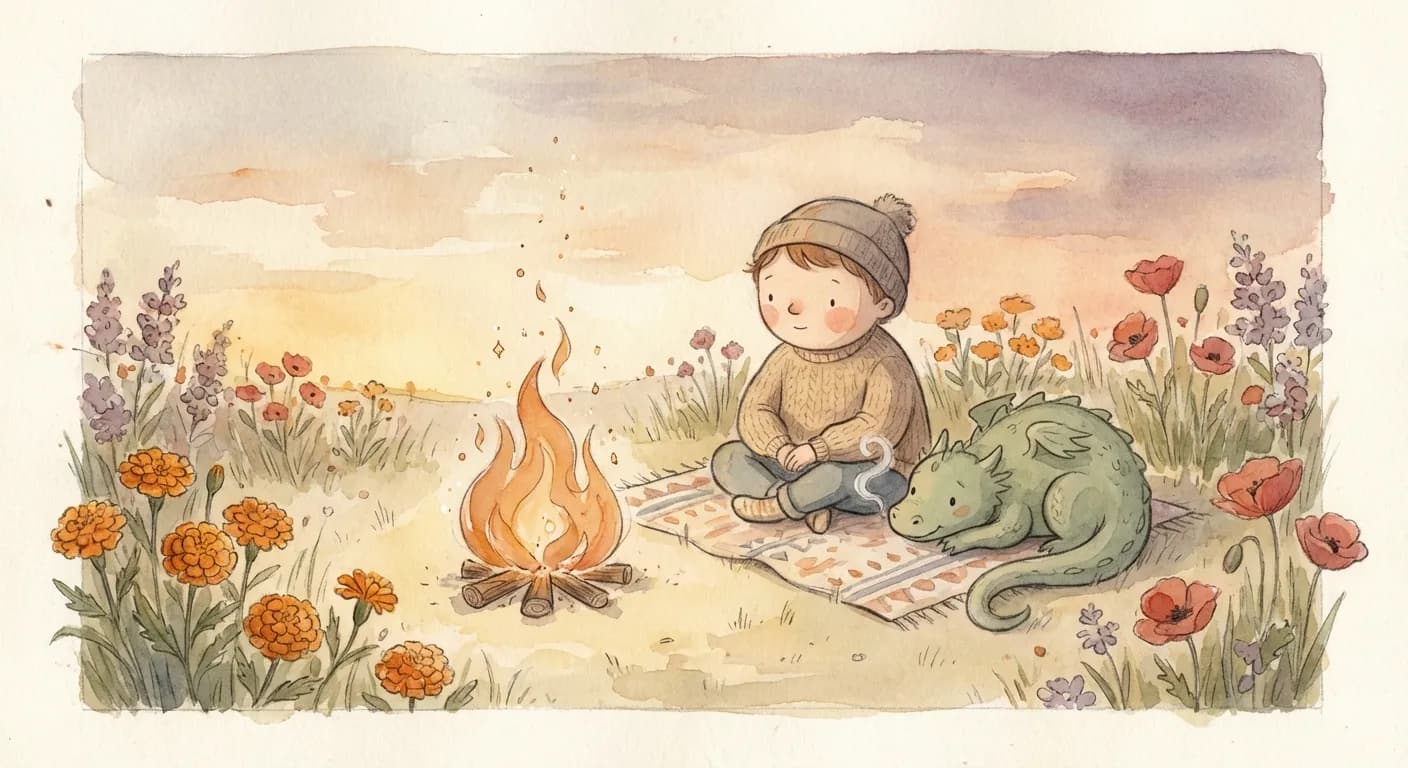
When your child hears about a character who feels the heat rising—who discovers the Cool Breath and picks a different path—they ride along from a safe distance. They feel the frustration, watch the character cope, and start to believe they could choose differently too. No spotlight. No pressure.
That’s why HeroMe stories use the Red Heat Dragon—not to make anger the villain, but to give it a shape kids can work with. The dragon isn’t the child. It’s the feeling. And heroes can learn to work with dragons.
of parents notice fewer outbursts after two weeks of story-based coping
of connected reading before bed recommended
What Makes HeroMe Different
The Dragon Gets a Name
Anger becomes the Red Heat Dragon—something external your child can spot, study, and learn to work with instead of being consumed by.
Externalization, Not Shame
The story separates your child from their anger. The dragon isn’t them. It’s a feeling—and heroes can learn to handle dragons.
Cool Breath and Real CBT
Breathing regulation and frustration tolerance techniques show up naturally in the adventure. Your child practices them alongside the hero.
Triggers Become Plot Points
Your child’s real anger triggers—the sibling who won’t share, the game that’s unfair—get woven into the story as obstacles the hero faces and overcomes.
Conversation Starters for After
Each chapter comes with prompts that help you and your child talk about anger without anyone feeling put on the spot.
Risk-free, cancel anytime
How Anger Manifests at Every Age
| Ages 3–5 | Ages 6–8 | Ages 9–12 | |
|---|---|---|---|
| Typical expression | Tantrums, hitting, biting, throwing | Verbal outbursts, defiance, door slamming | Sarcasm, passive aggression, emotional shutdown |
| Underlying causes | Frustration with limited language and autonomy | Perceived unfairness, social conflicts | Identity struggles, peer pressure, unmet expectations |
| Best strategies | Naming emotions, calm-down corners, sensory tools | Anger thermometer, deep breathing, problem-solving | Journaling, cognitive reframing, physical outlets |
| Meltdown vs tantrum | Mostly tantrums (goal-directed) | Mix of both; can learn to distinguish | Mostly meltdowns (overwhelm-driven) or controlled outbursts |
Frequently Asked Questions
Questions parents ask us all the time about kids and anger.
Explore This Topic
Dive deeper into specific areas with our focused guides.
A calmer tomorrow can start tonight
Five minutes to create a story made just for your child—one that helps them face the Red Heat Dragon and wake up with a little more calm.
Create Your Free Story