Bedtime Doesn't Have to Be a Battle
Bedtime doesn’t have to be a nightly battle. And those dark, quiet hours don’t have to feel so hard for your kid. Here’s what actually helps.
What Are the Signs Your Child Has Sleep Problems?
Sleep struggles in kids tend to show up three ways: bedtime resistance (the endless stalling, tears, getting out of bed), nighttime disruptions (waking up a lot, nightmares, night terrors), and daytime fallout (exhaustion, crankiness, trouble focusing). When these patterns stick around, there’s usually some anxiety or a routine gap behind them.
Sleep problems look different depending on the age. Here’s what to watch for.
Bedtime Resistance
- The classic stall—one more story, one more drink of water, one more hug
- Getting clingy or anxious as bedtime gets closer
- Popping out of bed again and again after you’ve tucked them in
- Won’t let you leave the room until they’re asleep
Nighttime Fears
- Scared of the dark, monsters under the bed, or just being alone
- Needs several nightlights on and the door cracked open
- Nightmares or night terrors that keep coming back
- Wakes up frightened and can’t settle back down on their own
Disrupted Sleep Patterns
- Still lying awake 30+ minutes after lights out
- Waking up multiple times during the night
- Up before 5:30am and can’t fall back asleep
- Can’t stay asleep unless a parent is in the room
Daytime Impact
- Cranky, moody, or exhausted during the day for no clear reason
- Teachers saying they can’t focus or they’re zoning out in class
- More meltdowns and emotional blowups than usual
- Nodding off at weird times—in the car, during homework, at dinner
Remember: Sleep challenges show up differently in every family. A lot of these are pretty common and don’t necessarily mean something’s wrong. But if sleep problems hang on for more than a few weeks or start affecting your child’s day-to-day life, it’s worth bringing up with your pediatrician.
How Can Parents Help a Child Who Struggles With Sleep?
The single most effective thing you can do? A consistent bedtime routine. Pair it with a calm environment, less screen time before bed, a quick emotional check-in, and a soothing story. Most sleep problems start improving within two to four weeks when you stick with it.
You don’t need to overhaul everything. A few small, steady changes to bedtime can make a real difference.
Build a Predictable Wind-Down
Your kid’s brain can’t go from full-speed daytime to sleep mode just because you said "bedtime." It needs a runway. A simple 20-30 minute routine—bath, pajamas, story, lights out—tells the body that sleep is on the way. Once their nervous system learns the pattern, they start relaxing before you even flip the switch.
Same time every night, even weekends. That consistency does more heavy lifting than any single trick.
Make the Bedroom Feel Safe
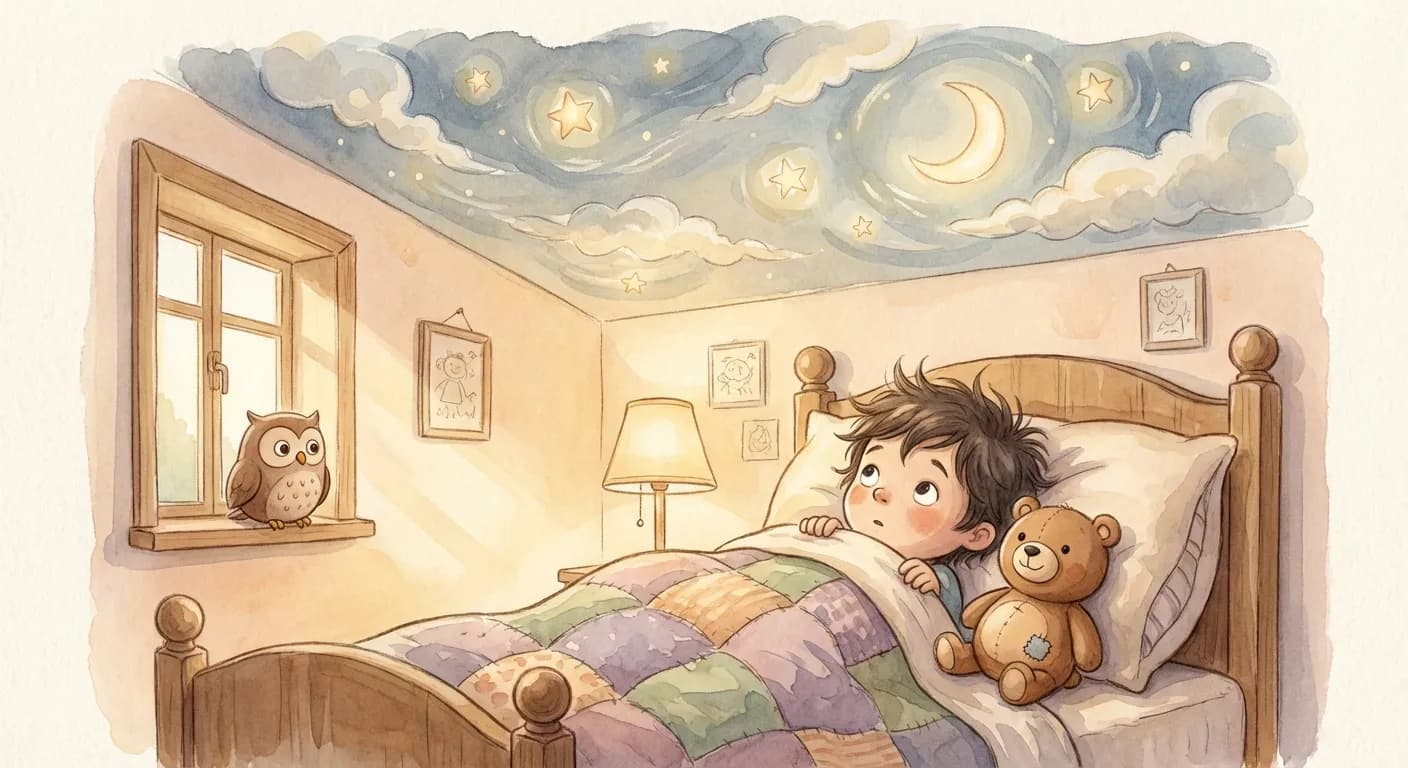
For a kid with nighttime fears, the bedroom can feel like a different place once the lights go off. Help them claim the space during the day so it feels familiar at night. A comfort object, a poster they picked, a nightlight they chose—small things that say "this is my room, and it’s safe."
Let them pick a ‘brave buddy’—a stuffed animal that stays in bed and ‘watches over’ them. Name it together. Kids take this seriously.
Don’t Dismiss the Fear—Work With It
Telling your kid "there’s nothing to be scared of" feels reassuring, but it actually shuts them down. They’re scared, and they just heard that their feelings don’t make sense. Instead, say you see their fear, and then gently steer toward what they can do about it. Kids who feel heard are way more willing to try being brave.
Try: ‘The dark feels scary right now, huh? What do you think your stuffed bear would do if he felt scared?’ That shifts them from fear to problem-solving.
Use Stories as a Bridge to Calm
A good bedtime story does more than distract—it gives your child’s racing mind somewhere safe to land as they drift off. And when the character in the story faces fears like theirs, it sends a quiet message: you’re not the only one who feels this way.
Pick stories where the character gets scared but finds a way through. That’s how kids learn that courage isn’t about not being afraid—it’s about what you do next.
Why Bedtime Stories Are the Best Sleep Tool You Already Have
You can’t reason a child to sleep. But you can read them there.
And when the story stars a character who looks like your kid, lives in a world like theirs, and faces the same nighttime fears? Something clicks. Your child watches that character be brave, and they carry that image with them as their eyes close.
of families report improved bedtime experiences within the first week
for a calming story to ease bedtime anxiety
personalized chapters in every HeroMe story
What Makes HeroMe Different
A Calm-Down Ritual That Works
The story itself becomes the wind-down. Characters slow their breathing, relax their bodies, and settle in—and your child follows along naturally as they listen.
Their Bedroom, Their Story
Each story features your child’s comfort objects, pets, and people—so the safe world in the story feels like their own bedroom.
Nighttime Fears Get a Name
The scary shadows and creaky sounds your child dreads become something the hero faces and conquers—giving your kid a brave image to hold onto as they drift off.
12 Chapters That Build Toward Brave Nights
Each chapter picks up where the last left off, gradually building your child’s sense of safety—so by the end, they own bedtime instead of dreading it.
Risk-free, cancel anytime
Sleep Challenges by Age
| Ages 3–5 | Ages 6–8 | Ages 9–12 | |
|---|---|---|---|
| Recommended sleep | 10–13 hours including naps | 9–12 hours | 9–11 hours |
| Common challenges | Nighttime fears, bedtime resistance, nap transitions | Nightmares vs night terrors, screen time impact | Delayed sleep phase, homework pressure, devices in bedroom |
| Best strategies | Consistent routine, comfort objects, calm environment | Screen-free buffer, worry dump, bedtime stories | Sleep hygiene education, wind-down routine, gradual schedule shifts |
| Red flags | Snoring, breathing pauses, extreme bedtime distress | Chronic fatigue, falling asleep in class | Insomnia lasting weeks, mood changes, academic decline |
Frequently Asked Questions
Questions parents ask us all the time about kids and sleep.
Explore This Topic
Dive deeper into specific areas with our focused guides.
Related Guides
Tonight Can Be Different
Create a bedtime story built around your child’s world—one that helps them feel safe, brave, and actually ready to close their eyes.
Start Your Free Bedtime Story