Sleep Challenges in Children Ages 3\u20135: From Monsters to Morning
Your preschooler has discovered imagination\u2014and imagination has discovered bedtime. If your evenings have become a cycle of \u201cone more story,\u201d monster checks, and 2am footsteps padding toward your bedroom, you are not alone. Here is what is actually happening in your child\u2019s developing brain, and what you can do about it tonight.
What You'll Learn
- Your preschooler’s sleep struggles happen because their imagination is growing faster than the part of their brain that sorts real from make-believe.
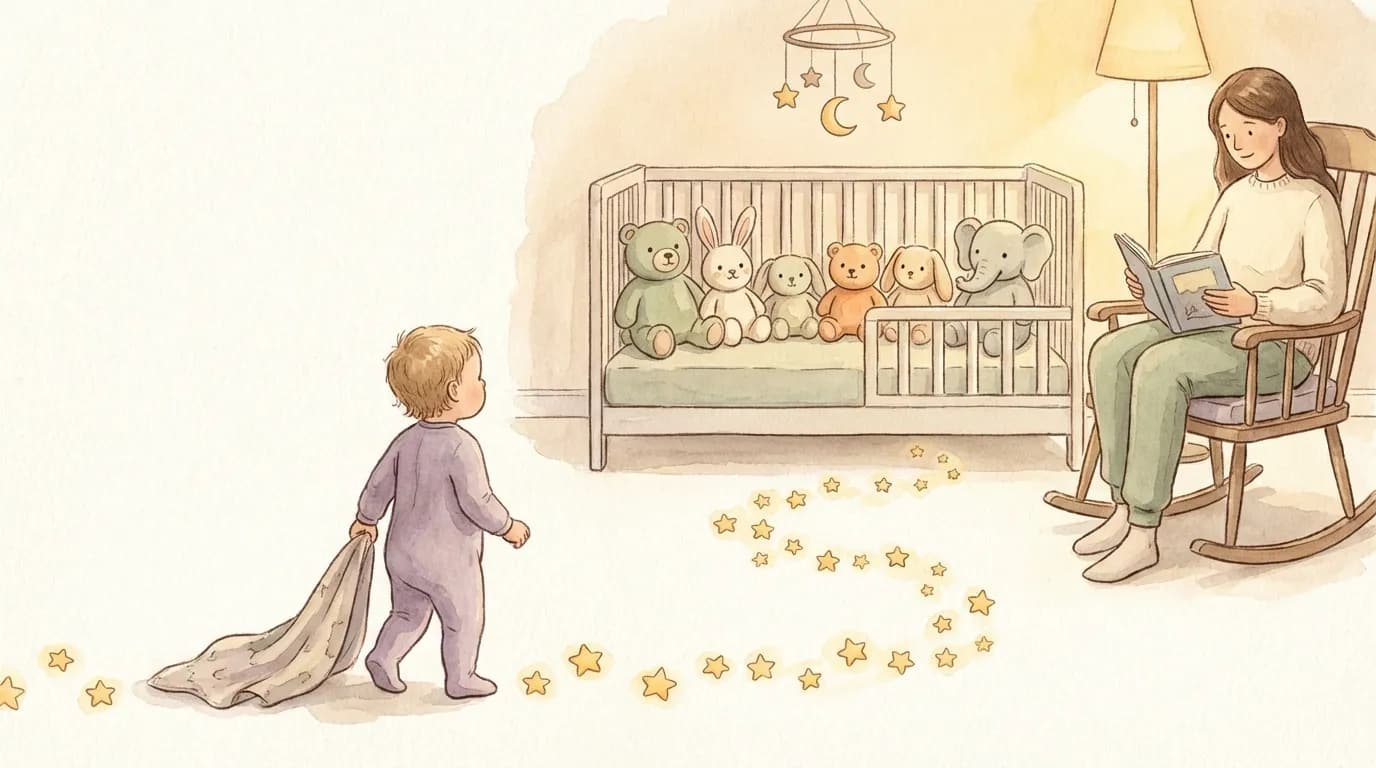
- For fear of the dark, acknowledge and reframe rather than dismissing—pair a warm-toned nightlight with a special "brave buddy" stuffed animal.
- Bedtime stalling is almost always about holding onto you a little longer, so build those last requests into the routine and end with the same phrase every night.
- When your child drops their nap, replace it with 30 to 45 minutes of quiet time and move bedtime earlier to prevent the overtiredness spiral.
- Personalized bedtime stories are especially powerful for ages 3 to 5 because young children work through big feelings through stories, not conversations.
Why Do Children Ages 3–5 Struggle With Sleep?
Between ages three and five, your child's imagination takes off like a rocket—and bedtime takes the hit. Suddenly they can picture monsters in the closet, imagine scary things in the dark, and worry about things that have not happened. Add in the nap-to-no-nap transition, and sleep can feel like it is falling apart. Bedtime resistance, fear of the dark, and night waking are the three most common sleep challenges at this age.
Between ages three and five, the part of your child's brain that powers imagination, planning, and thinking about the future is coming online in a big way. This is wonderful for pretend play and storytelling. It is less wonderful for bedtime.
For the first time, your child can vividly imagine things that are not there. A shadow becomes a creature. A creaking house becomes footsteps. The problem is that the part of the brain that sorts out what is real from what is imagined is still years from being fully developed. So when your three-year-old says there is a monster in the closet, they are not being manipulative. Their brain genuinely cannot be sure there is not.
At the same time, your preschooler is becoming more aware of being a separate person from you. And bedtime is the moment each day when that separateness feels biggest. The house goes quiet, the lights go down, and they are alone with their newly powerful imagination. Research from Sadeh and colleagues found that sleep difficulties at this age are most strongly predicted by the combination of a child's growing imagination and how safe they feel at night.
Fear of the Dark and Monsters
Fear of the dark is the single most common nighttime challenge for preschoolers, affecting roughly 73% of children between ages four and six in community samples. It is not a weakness or a phase to push through. It is a developmental stage where imagination outpaces the ability to self-reassure.
What actually helps is not dismissing the fear (“There are no monsters, go to sleep”) or over-validating it (“Let me check everywhere to make sure”). Both approaches miss the mark. Dismissal teaches your child that their feelings are wrong. Elaborate checking rituals can accidentally confirm that there was something worth checking for.
What works instead
- Acknowledge and reframe: “Your imagination is so strong it can make the dark feel scary. Let's make the dark feel safer.”
- Warm-toned nightlight: A dim amber or red nightlight keeps the brain's sleep signals working while giving your child enough light to see that the shadows are just shadows.
- A “brave buddy”: A specific stuffed animal or comfort object designated as the nighttime protector. Give the buddy a name and a story about its protective powers.
- Gradual dimming over weeks: Start with whatever light level your child needs. Reduce it slightly every few nights as confidence builds.
Bedtime Resistance and Stalling Tactics
“I need water.” “I need to go potty.” “One more hug.” “My blanket is wrong.” If this sounds familiar, welcome to the preschooler stall. Bedtime resistance is the second most reported sleep challenge in this age group, and it is almost always about one thing: your child does not want the connection of the day to end.
A systematic review by Mindell and colleagues confirmed that behavioral interventions—particularly consistent bedtime routines—are effective for reducing both bedtime resistance and night wakings in young children (Mindell et al., 2006, Sleep, DOI: 10.1093/sleep/29.10.1263). The routine itself matters less than its predictability. Bath, pajamas, two books, a song. Or teeth, stories, cuddle, lights out. The specific steps matter far less than doing them in the same order every single night.
Why stalling works (for them)
- Each request extends time with you—the safest person in their world
- It delays the moment they are alone in the dark
- Inconsistent responses teach them that persistence pays off
- Overtired children actually have more trouble self-regulating at bedtime
The routine that works
- Build in “one last” requests preemptively: water on the nightstand, preemptive potty trip
- Use a visual routine chart your child helped create
- Offer two controlled choices: “Dinosaur pajamas or rocket pajamas?”
- End with the same phrase nightly: “I love you. See you in the morning.”
Night Waking and Co-Sleeping Transitions
Night waking is normal at every age—adults do it too. The difference is that adults have learned to resettle themselves without fully waking. Your preschooler has not yet mastered this skill. When they surface from a sleep cycle at 2am, they notice the conditions are different from when they fell asleep (you were there, now you are not) and they sound the alarm.
This is why sleep scientists consistently recommend that children fall asleep under the same conditions they will find at 2am. If your child falls asleep with you lying beside them, waking to an empty room is genuinely disorienting. The goal is not to take away comfort but to gradually help your child feel safe on their own—moving from needing you right there to knowing they are okay. Comfort objects and bedtime stories are powerful tools for making this shift.
Gregory and Sadeh's broad review of sleep problems and their links to childhood difficulties highlights the importance of graduated, supportive approaches when changing sleep arrangements (Gregory & Sadeh, 2015, Journal of Child Psychology and Psychiatry, DOI: 10.1111/jcpp.12469). For families transitioning from co-sleeping, a graduated approach works better than abrupt change. Start by sitting beside their bed instead of lying in it. Over a week, move the chair toward the door. Then to the hallway. Each step takes as long as your child needs. There is no deadline.
The Nap Transition and Its Surprising Impact on Night Sleep
Somewhere between three and five, your child will drop their daytime nap. This transition is rarely smooth. For weeks or even months, your child may alternate between needing a nap and refusing one, leaving you guessing daily.
What many parents do not realize is that dropping the nap is one of the most common triggers for nighttime sleep problems at this age. You would think a child who skipped their nap would crash at bedtime, but it actually works the opposite way. An overtired child's body floods with stress hormones that make it harder to fall asleep and stay asleep. Owens and Mindell's review of children's sleep problems notes that transition periods—including the shift away from naps—can temporarily make nighttime wakings worse until your child's body clock adjusts (Owens & Mindell, 2011, Pediatric Clinics of North America, DOI: 10.1016/j.pcl.2011.03.011).
Managing the transition
- Replace the nap with “quiet time”—30 to 45 minutes of calm activity (audiobooks, puzzles, coloring) in their room. This provides rest without interfering with nighttime sleep pressure.
- Move bedtime earlier temporarily—as much as 45 minutes—to compensate for lost daytime sleep.
- Expect the adjustment to take two to four weeks. Late-afternoon meltdowns are normal during this period and are not a sign you should reinstate the nap.
How Personalized Stories Help Preschoolers Sleep
For children aged three to five, stories are not just entertainment—they are how your child makes sense of the world. When a preschooler hears a story about a character who looks like them, sleeps in a room like theirs, and hugs the same stuffed bear they hug, that character's experience becomes a practice run for their own.
This is why bedtime stories about brave characters who learn to love the dark, who say goodnight to their toys, who discover that nighttime sounds are just the house settling—these stories do emotional work that a conversation simply cannot. A review by Montgomery and Maunders found that story-based approaches work especially well for young children because they process feelings through narrative more easily than through talking things out (Montgomery & Maunders, 2015, Children and Youth Services Review, DOI: 10.1016/j.childyouth.2015.05.010).
Frequently Asked Questions
Common questions parents ask.
Sleep Challenges at Other Ages
Sleep changes as your child grows. Explore what to expect at every stage.
A Bedtime Story Built for Your Preschooler
Create a personalized story featuring your child's name, their favorite comfort object, and gentle lessons about feeling safe in the dark. Designed for bedtime reading with children ages 3 to 5.
Start Your Free Story