When Making Friends Feels Hard
Social struggles come down to something basic: every kid wants to belong. Whether yours is dealing with shyness, exclusion, or group anxiety, the skills they need can be learned—and stories are a surprisingly powerful way to teach them.
What Are Signs of Social Challenges in Children?
Kids who are struggling socially might show emotional signs (anxiety before social events, low confidence), behavioral patterns (dodging group activities, trouble making or keeping friends), and interaction issues (misreading cues, can't share, constant peer conflicts). What this looks like changes a lot depending on age.
Social struggles don't always look like shyness. Sometimes they show up as avoidance, misreading people's faces, or assuming everyone's against them—things that are easy to miss or write off as moodiness.
Friendship Signs
- Has a really hard time making friends or keeping the ones they have
- Chooses to play alone even when other kids are right there
- Keeps saying "nobody wants to play with me"
- Struggles with taking turns, sharing, or figuring out group dynamics
- Makes friends fast but loses them over small disagreements
Perception Signs
- Reads a neutral face or tone of voice as mean or rejecting
- Gets deeply hurt by perceived exclusion, even when it wasn't intentional
- Convinced other kids are talking about them or laughing at them
- Misses body language and non-verbal cues that other kids pick up on
- Automatically assumes the worst whenever a social situation is unclear
Avoidance Signs
- Won't go to birthday parties, group activities, or social events
- Falls apart when they have to speak in front of anyone
- Always hangs back and watches instead of joining in
- Gets stomachaches or headaches right before social situations
- Clings to you or other familiar adults whenever there's a group
Remember: Social development happens on every child’s own timeline, and being introverted is a temperament—not a problem to fix. These signs just mean your child might benefit from some targeted support and strategies to build confidence in connecting with others.
How Can Parents Help a Child With Social Challenges?
Help your child's social development by role-playing social situations at home, setting up low-pressure playdates, teaching specific friendship skills, validating how they feel, and reading stories about characters who face similar challenges. Don't force interactions—build confidence one small step at a time.
You don't need to engineer your child's social life—but you can set up conditions where social confidence actually grows. These research-backed strategies help kids practice the skills of belonging.
Practice Conversations at Home
Social skills are just that—skills. They get better with practice. Role-play the tricky stuff at home: how to introduce yourself, how to jump into a group that's already playing, what to do when a friend says no. Rehearsing with you in a safe space takes the pressure off when it happens for real.
Use stuffed animals or action figures to act out social scenarios—it takes the self-consciousness out and makes practice feel like play.
Facilitate Small, Structured Playdates
Big group settings are overwhelming for socially anxious kids. Start with one-on-one playdates built around a specific activity—baking cookies, building LEGOs, a board game. The activity gives them something to talk about naturally. Keep it short—even 45 minutes—and end it while things are still going well.
Pick an activity your kid is actually good at. Starting from a place of confidence makes everything easier.
Celebrate Social Attempts, Not Just Successes
How a social interaction turns out matters way less than the guts it took to try. When your kid says hi to a neighbor or raises their hand in class, call it out—"That was brave, you started the conversation"—even if it didn't go perfectly. You're helping them see themselves as someone who tries, and that identity is the foundation of social confidence.
Name the courage out loud: "You felt nervous and you did it anyway. That's exactly what brave looks like."
Correct Cognitive Distortions Gently
Kids with social challenges tend to assume the worst—they think everyone's excluding them, laughing at them, or hates them. When your child describes a social situation that sounds worse than it probably was, gently offer another possibility: "I wonder if they just didn't see you—what else could be true?" This is the Spotlight Effect correction: helping kids realize other people aren't watching them nearly as closely as they think.
Try: "What's another way you could look at what happened?" instead of "That's not what happened."
Support Gradual Social Exposure
Avoiding social situations feels like relief in the moment, but it makes the fear stronger over time. Work with your child to build a ladder of social challenges—easiest at the bottom, hardest at the top—and help them take one small step at a time. Wave to a neighbor. Talk to a cashier. Join one after-school activity. Each tiny success proves that social situations are survivable.
Let your kid pick the next step themselves. They follow through better when they feel ownership.
Find Your Child's Social 'On-Ramp'
Connecting with people is so much easier when you already have something in common. Kids who struggle in general social situations often do great in structured groups built around something they love—robotics club, art class, animal shelter volunteering, a sport. The shared activity gives them something to talk about automatically and takes away the pressure of "just socializing." Finding that on-ramp can change everything.
Ask your kid: "What would you want to do if you found a friend who liked the same things as you?"
Why Stories Help Children Ring the Bell of Voice
Friendship skills aren’t taught—they’re practiced. Stories create the practice space.
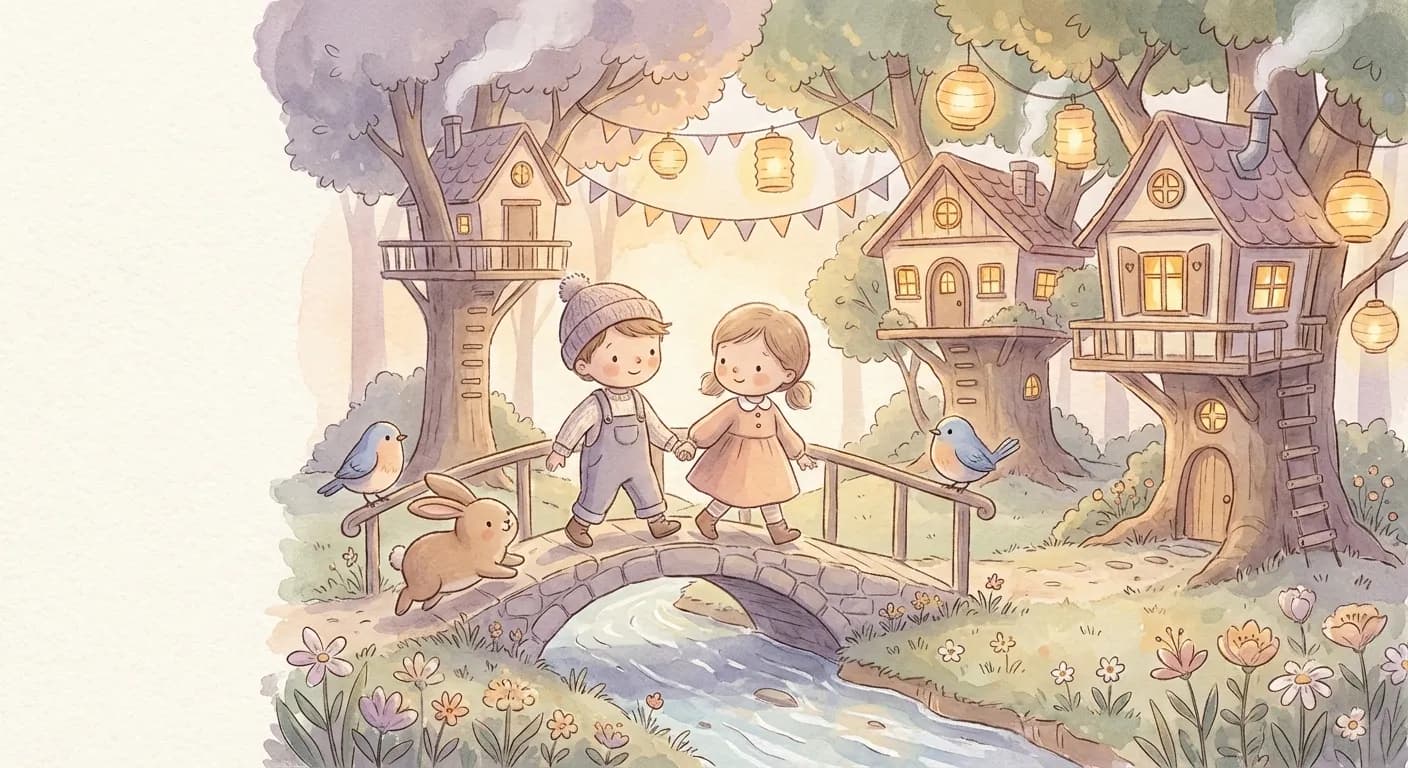
When a child hears about a hero silenced by the Silencing Moss—who learns to ring the Bell of Voice and cross the Bridge of Hello—something shifts. The struggle gets seen and named. The path forward becomes visible. And the hero discovers that reaching out, even awkwardly, is the bravest thing of all.
HeroMe stories are built on this. They use your child's name, their social world, and their specific fears—exclusion, group anxiety, the terror of saying hello—to create a journey that mirrors what they actually go through and shows them what's possible on the other side.
of children show more confidence in social situations after 4 weeks
of connected reading before bed recommended
What Makes HeroMe Different
The Bridge of Hello
Your child’s hero learns to cross the Bridge of Hello—taking the terrifying first step of reaching out. Each crossing gets a little easier, a little braver.
Social Fears Become Adventures
Shyness, exclusion, and group anxiety get transformed into challenges the hero can name and face—without anyone pointing the finger at your child.
Real CBT Woven Into the Plot
Behavioral Activation, gradual exposure, and Spotlight Effect correction show up naturally. Your child absorbs social skills through the story, not a lesson plan.
Bedtime Becomes Connection Practice
The reading ritual itself models safe, connected relationship—the exact foundation your child needs to build social confidence in the real world.
Social Practice Activities
Each chapter includes a low-pressure activity—like practicing a greeting or drawing a friendship map—that bridges the story to real-world connections.
Risk-free, cancel anytime
Social Skills Development by Age
| Ages 3–5 | Ages 6–8 | Ages 9–12 | |
|---|---|---|---|
| Key milestones | Parallel play to cooperative play, learning to share | Forming friendships, understanding rules, group play | Navigating cliques, empathy deepening, conflict resolution |
| Common struggles | Not sharing, hitting peers, shyness at playdates | Being left out, misreading social cues | Peer rejection, social media pressure, bullying |
| Best strategies | Role-playing, social stories, supervised playdates | Conversation practice, friendship skills coaching | Perspective-taking exercises, assertiveness training |
| Red flags | No interest in peers by age 4 | No close friendships, chronic exclusion | Complete social withdrawal, persistent bullying |
Frequently Asked Questions
Questions parents commonly ask about social challenges and building connection skills in kids.
Explore This Topic
Dive deeper into specific areas with our focused guides.
Related Guides
Your child's journey to belonging starts tonight
Five minutes is all it takes. Create a personalized story that helps your child ring the Bell of Voice, cross the Bridge of Hello, and discover what belonging feels like.
Create Your Free Story