Social Skills in Children Ages 6-8: Finding Their Way on the Social Playground
School changes everything. Suddenly your child is dropped into a complex social ecosystem with unwritten rules, shifting alliances, and the daily possibility of being included or left out. This is the age when social skills stop being optional and become essential.
What You'll Learn
- Between ages 6 and 8, the playground becomes a whole social world -- and your child is building the mental maps they will use to read social situations for years to come.
- Use TV shows, movies, and dinner conversations to teach social cue reading — pause scenes and ask "How do you think that character is feeling?"
- A single stable friendship can buffer against the effects of peer exclusion, so the goal is not popularity but helping your child find even one person who gets them.
- This is the age when empathy shifts from automatic (crying because someone else is crying) to intentional (understanding why someone is upset) -- practice seeing things from someone else's point of view after conflicts and during story time.
- Stories mirror real social challenges at a safe distance, allowing children this age to rehearse courage and absorb strategies without public performance pressure.
What Is the Hidden Social Complexity for Children Ages 6–8?
For children ages 6–8, the playground becomes a complex social landscape with unspoken rules, shifting alliances, and subtle hierarchies. Learning to read the room, handle exclusion, build empathy, and cooperate in groups are the core social challenges at this age—skills that develop at different rates and can cause significant distress when they lag.
Watch a group of six-year-olds at recess and you are witnessing one of the most complex social negotiations humans engage in. Who gets to join the game? Who decides the rules? What happens when someone breaks them? These are not trivial questions. For a child between six and eight, the playground is where they learn whether the social world is a place that welcomes them or shuts them out.
Research by Crick and Dodge showed that children at this age are building the mental frameworks they will use to make sense of social situations for years to come. A child who learns to read unclear social moments accurately—understanding that a classmate who bumps into them at recess probably did it by accident, not on purpose—will handle the social world more successfully than a child who assumes the worst (Crick & Dodge, 1994, Psychological Bulletin, 115(1), 74–101,DOI: 10.1037/0033-2909.115.1.74).
This is why the social experiences of the early school years matter so much. Your child is not just making friends. They are building a social operating system.
Learning to Read the Room
Between six and eight, your child is learning to pick up on all the things people communicate without words: facial expressions, tone of voice, body language, and the subtle signals that tell you whether someone is happy to see you or wishes you would go away. Adults do this automatically, but it is actually an incredibly complex skill -- and it develops unevenly.
Some children seem to be born with social radar. Others need explicit coaching. Neither is better or worse—it is simply a difference in how this particular set of skills develops.
Teaching social cue reading at home
- Use TV and movies as training ground. Pause a scene and ask: “How do you think that character is feeling? What tells you that?” This builds the habit of reading faces and situations.
- Practice at the dinner table. Share a social moment from your own day: “My colleague seemed upset today. I noticed because she was quieter than usual.” Model the process of noticing.
- Debrief after social events. Not interrogating—just curious. “What was the best part of the party? Was there a tricky moment?” Help them reflect without judgment.
- Name the invisible rules. “When you join a game that is already happening, it helps to watch first and then ask to play. Jumping right in can feel surprising to the other kids.”
When They Are Left Out: The Pain of Rejection
There are few things more painful for a parent than hearing your child say they had no one to play with at recess. Being left out activates the same brain pathways as physical pain. When your seven-year-old comes home and says everyone was mean today, their hurt is real -- not just emotionally, but physically.
Asher and Paquette's research on loneliness in childhood found that children who are regularly left out are at higher risk for feeling down, struggling in school, and pulling away from others -- and that these effects can last into the teen years. But the same research also found that even one solid friendship can protect against those effects (Asher & Paquette, 2003, Current Directions in Psychological Science, 12(3), 75–78, DOI: 10.1111/1467-8721.01233).
This means that the goal is not to make your child popular. It is to help them find even one person who gets them.
What to say
- “That sounds really hard. I am glad you told me.”
- “It is okay to feel sad about that. Anyone would.”
- “You do not have to be friends with everyone, but everyone deserves to be treated with kindness.”
- “What do you think you could try tomorrow?”
What to avoid saying
- “Just ignore them.” (Dismisses real pain.)
- “They are probably just jealous.” (Avoids the real issue.)
- “I will call their parents.” (Unless bullying; removes agency.)
- “You need to try harder to fit in.” (Implies the problem is them.)
Building Empathy: Seeing Through Someone Else's Eyes
Between six and eight, your child develops an ability that transforms their social world: seeing things from someone else's point of view. For the first time, they can genuinely understand that another person might see a situation differently than they do. A five-year-old thinks everyone feels what they feel. A seven-year-old is beginning to grasp that the child they accidentally knocked down might be hurt even though they did not mean to cause harm.
This is the age when empathy shifts from automatic (crying because another child is crying) to intentional (understanding why someone is upset and choosing to respond). Rose and Rudolph's research found that children who get stronger at understanding others' feelings during the early school years form deeper friendships and bounce back better from social setbacks (Rose & Rudolph, 2006, Psychological Bulletin, 132(1), 98–131, DOI: 10.1037/0033-2909.132.1.98).
Everyday empathy exercises
After a conflict: “How do you think Liam felt when that happened? What might he have been thinking?”
During reading time: “Why do you think the character did that? What would you have done?” Stories are empathy training in disguise.
When they see someone struggling: “It looks like that child dropped all their books. What could you do?” Prompt action, not just observation.
At home: “When you yelled at your sister, she went to her room. What do you think she was feeling?” Use family life as a safe lab for empathy practice.
Working Together: Cooperation in Teams and Groups
School introduces a new social challenge that preschool barely hinted at: structured cooperation. Group projects, team sports, classroom activities—all of these require children to negotiate roles, manage disagreements, and work toward shared goals with peers they may not have chosen.
For some children, this is exciting. For others, it is overwhelming. The child who thrives one-on-one may freeze when asked to contribute to a group project. The child who loves soccer may melt down when they do not get to play the position they wanted. These reactions are not character flaws. They are growing edges—places where your child is being stretched beyond what they can comfortably handle right now.
Long-term research by Rubin and colleagues showed that children who learn to cooperate well during the early school years do significantly better socially and academically through middle school, whether they are naturally outgoing or more reserved (Rubin et al., 2007, Handbook of Child Psychology, DOI: 10.1002/9780470147658.chpsy0310).
Supporting group skills
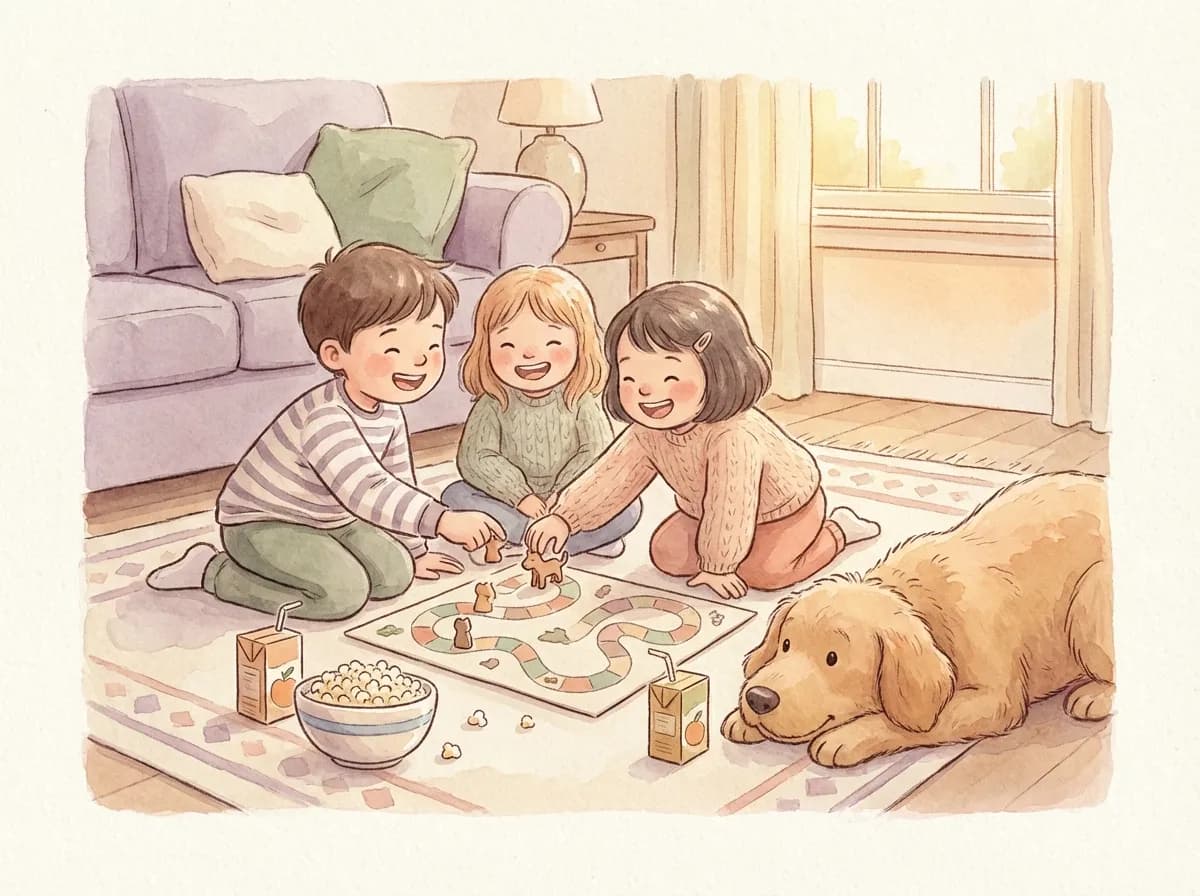
- Practice at home with board games where taking turns, losing gracefully, and following rules are built into the fun.
- Before group activities, prep your child: “You might not get to choose your role. What could you do if that happens?”
- Celebrate cooperation, not just winning. “I noticed how you passed the ball to Jake even though you could have scored yourself. That was a great team move.”
Stories as Social Rehearsal
At six, seven, and eight, children are old enough to engage with stories that mirror their real social challenges but young enough that stories still hold enormous emotional power. When a character in a book faces the same lunchroom loneliness or playground exclusion your child experienced that day, something shifts. The child sees that they are not alone in this experience, and they watch a character model a path forward.
This is not escapism. It is practice. Research confirms that stories designed to build social-emotional skills work especially well at this age because children can hold two thoughts at once: “this is a story” and “this is also about me.” That awareness is what makes the lessons stick in real life (Bierman, 2004, Peer Rejection: Developmental Processes and Intervention Strategies, Guilford Press).
Frequently Asked Questions
Common questions parents ask.
A Story Where They Find Their Place
Create a personalized story where your child finds their way through the social playground—learning to read cues, handle setbacks, and discover that belonging does not mean changing who they are.
Start Your Free Story