Helping Your Child with Separation Anxiety
The grip on your hand at school drop-off. The tears when you leave the room. Separation anxiety is one of the most heartbreaking challenges for both parent and child. But it is also one of the most treatable\u2014and understanding it is the first step toward helping.
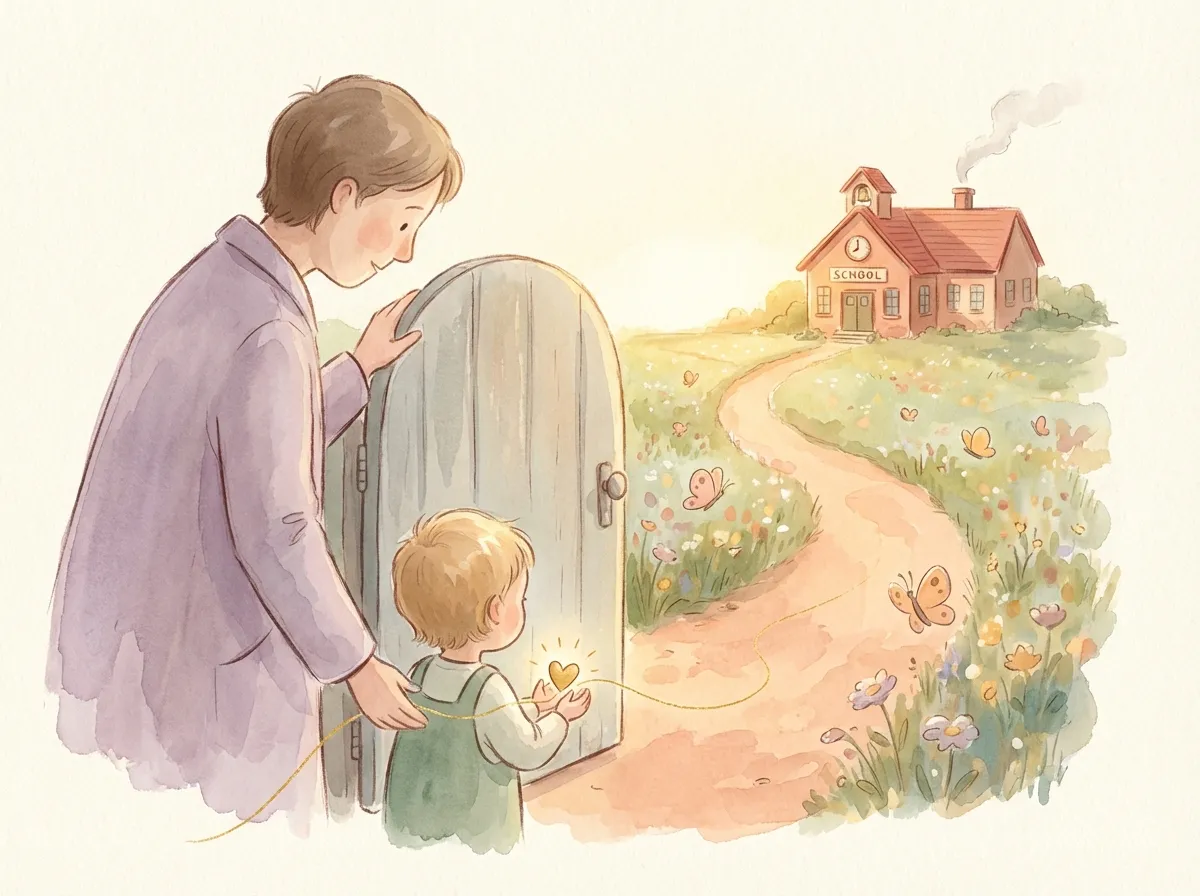
What You'll Learn
- Separation anxiety is a biological survival response, not a sign of weakness or poor parenting.
- A short, predictable goodbye ritual builds trust and reduces distress more effectively than sneaking away.
- Gradual exposure to brief separations helps your child build evidence that they can cope and you always return.
- Personalized stories let children rehearse bravery during goodbyes from a safe, imaginative distance.
- With consistent strategies, most children develop the security to handle separations confidently.
What Is Separation Anxiety in Children?
Separation anxiety is the distress your child feels when they are apart from you—and it is hardwired into their biology, not a sign of weakness or anything you did wrong. Most children go through it as a normal phase. About 4% develop separation anxiety disorder, where the distress is more intense, lasts longer, and gets in the way of everyday life.
When your child melts down at drop-off or clings to you at the door, it is not because you spoiled them or did something wrong. Their brain is running a survival program that kept children alive for thousands of years: stay close to the person who keeps you safe. Your child's brain is doing exactly what it was built to do.
The key distinction is between developmental separation anxiety—a normal stage that nearly every child goes through—and separation anxiety disorder (SAD), which is more intense, lasts longer, and gets in the way of daily life. About 4% of kids develop SAD, making it one of the most common childhood anxiety issues.
What Does Normal Separation Anxiety Look Like by Age?
Separation anxiety follows a fairly predictable pattern as kids grow. Knowing what is normal at each age helps you tell the difference between expected distress and something that may need extra support.
8–14 months
The classic “stranger anxiety” phase. Your baby has figured out that you still exist when you leave the room—but they do not yet understand that you will come back. Crying when you walk away is completely normal and healthy at this age.
15–36 months
Separation anxiety typically peaks around 18 months and then gradually fades. Toddlers may cry at daycare drop-off but usually settle within 10 to 15 minutes. If separation distress is intense and does not ease with time and routine, talk with your pediatrician.
3–6 years
Most kids have moved past the worst of separation anxiety by age 3. Brief nervousness with new situations (new school, new babysitter) is still normal. But intense separation distress that lasts more than four weeks at this age may point to separation anxiety disorder.
7 years and older
Significant separation anxiety at this age is less common and worth taking seriously. If your school-age child cannot go to school, refuses sleepovers, or panics when you leave the house, it is time to seek professional guidance.
How Do You Know When Separation Anxiety Is More Than a Phase?
Every child cries at some goodbyes. The question is whether the distress matches the situation, whether it passes, and whether it stops your child from doing things they want or need to do. Here are the signs that separation anxiety has gone beyond what is developmentally expected:
It has been going on for over four weeks with no improvement, even with consistent routines.
The reaction is extreme: Panic attacks, vomiting, or inconsolable crying that lasts well beyond the actual goodbye.
Avoidance: Your child refuses to go to school, attend parties, or sleep alone, and this refusal is getting worse.
The worry starts hours or days before: Your child begins dreading the separation long before it happens, which takes over their ability to enjoy the present.
Physical symptoms: Repeated stomachaches, headaches, or nausea tied specifically to separation events.
What Strategies Help With Separation Anxiety?
These strategies are grounded in research on attachment and anxiety, adapted for real family life. They work best when you stick with them consistently over weeks, not just try them once. The good news: for mild to moderate separation anxiety, what you do at home can be just as effective as therapy.
Create a transition object
A small item that connects your child to you—a pebble from a family walk, a note in their lunchbox, a bracelet they can touch when they miss you. It is not magic, but it is a physical reminder that your bond is constant even when you are not right there. For younger kids, spraying your perfume on their stuffed animal can be incredibly comforting.
Establish a goodbye ritual
A short, warm, predictable goodbye that is the same every time. Maybe a special handshake, three kisses, or a whispered phrase. It does two things: it tells your child the goodbye is happening (no sneaking away), and its predictability is comforting. Keep it brief—a long, drawn-out goodbye stretches out the pain. Say it, mean it, go.
Practice gradual exposure
Start with short, manageable separations and slowly increase the time. Leave your child with someone they trust for 15 minutes, then 30, then an hour. Each successful separation builds proof in your child's brain: I can handle this, and they always come back. Celebrate each step—not the absence of tears, but the bravery of trying.
Use social stories and personalized narratives
Stories about characters who work through separation give your child a framework for their own experience. When a story character who looks like your child, lives in your child's world, and faces the same scary goodbye finds courage—your child absorbs that possibility. This is the power of personalized storytelling: it lets children rehearse bravery from a safe distance.
Strengthen the reunion
The reunion matters just as much as the goodbye. When you come back, make it warm and focused. Put your phone down, get on their level, and give them your full attention for a few minutes. This teaches your child the pattern they need to believe: you leave, and you always come back.
How Can Families Prepare for the First Day of School?
The first day of school—whether it is kindergarten or a new grade after summer break—is one of the biggest separation anxiety triggers for kids of every age. What you do in the weeks before can make a real difference.
Back-to-school anxiety is not just a first-day problem. For many kids, the dread starts weeks before school begins and can hang on for the first several weeks of the term. Research shows that children who have a preparation period adjust faster than those who face the change cold (Dockett & Perry, 2007, International Journal of Early Years Education).
Visit the school before the first day
Walk the hallways, find the classroom, meet the teacher. Familiarity reduces the number of unknowns your child's brain needs to process on day one. If possible, do this more than once so the environment begins to feel like known territory rather than foreign ground.
Practice the goodbye ritual
Create a specific goodbye ritual—a secret handshake, a special phrase, a heart drawn on each other's palms. Practice it in low-stakes settings first (leaving them with a grandparent, a quick errand). By the time the first day arrives, the ritual is familiar and comforting rather than new and strange.
Adjust the schedule early
Start shifting bedtimes and wake-up times one to two weeks before school begins. A child who is well-rested handles emotional challenges far better than a sleep-deprived one. Pair the earlier bedtime with a calming story about a character starting something new. For tips on building that routine, see our guide on bedtime anxiety.
Normalize the anxiety out loud
Tell your child that everyone feels nervous about new beginnings—even adults. Share your own stories of feeling anxious before a first day. When children hear that their feelings are normal and shared, the shame of being scared diminishes. Say: “It makes sense to feel this way. Brave people feel scared and do it anyway.”
Create a bridge to home
A small object that reminds your child of home—a family photo in their backpack, a bracelet, a note in their lunch box. These “bridge objects” serve as tangible reminders that you are still connected even when apart. For children with separation anxiety, this can be the difference between a meltdown and a manageable moment.
How Do Personalized Stories Help With Separation Anxiety?
Personalized stories are especially powerful for separation anxiety because they speak directly to the core fear in a way your child can absorb. When a story character practices being brave during a goodbye—and discovers they were okay all along—your child's brain takes in that experience as partly their own.
Research shows that when stories are personalized, kids engage more deeply and the emotional impact is stronger because they identify more closely with the character. The closer the story mirrors your child's reality—their name, their school, their stuffed animal waiting at home—the more powerfully the message lands.
Over a series of chapters, the character gradually builds confidence, mirrors the step-by-step process that works in therapy, and shows your child coping strategies they can actually use. The story becomes a rehearsal for real-world bravery.
Frequently Asked Questions
Common questions parents ask.
A Story That Teaches Your Child: You Leave, and You Always Come Back
Create a personalized story where a brave character who shares your child's world learns to handle goodbyes—one chapter at a time.
Start Your Free Story