Bedtime Anxiety in Children: Why Nighttime Is the Hardest
The lights go off, and the worries turn on. If bedtime has become the hardest part of your day, you're not alone. For many families, the hours between \u201Ctime for bed\u201D and actual sleep have become a nightly struggle. Here's why\u2014and what you can do about it.
What You'll Learn
- Bedtime anxiety is one of the most common childhood struggles, peaking between ages 4 and 8
- Physical symptoms like stomachaches and racing heart at bedtime are real, not faked
- A predictable 30-to-45 minute wind-down routine reduces bedtime anxiety significantly
- Personalized stories read as the last step before sleep replace anxious thoughts with brave ones
- Graduated withdrawal builds independence without going cold turkey on parental presence
Why Does Anxiety Get Louder After Dark?
Bedtime is when anxiety gets loudest because everything that kept your child distracted all day disappears. The darkness switches on their brain's alarm system. The silence turns up the volume on every worry that was manageable during the day. Research confirms what you already know: bedtime is when childhood anxiety hits its peak.
During the day, your child's brain is busy. School, play, conversations, screens—all of it keeps the mind occupied and the anxious thoughts at bay. But when the lights go off and the distractions disappear, everything changes. The quiet and stillness that are supposed to invite sleep instead create a stage for worry.
Research shows that how bedtime goes directly affects how the next day goes. Anxious kids who sleep badly are more anxious, more irritable, and less able to cope the following day. In other words, fixing bedtime does not just fix nighttime—it improves everything that comes after.
Three factors converge to make bedtime especially hard for anxious children:
Loss of distraction
During the day, worries compete with everything else going on. At night, there is nothing to compete with. The worried thought gets the whole stage, and it fills it. For a child who is already prone to worry, that silence can feel crushing.
Darkness and the unknown
Fear of the dark is one of the most common childhood fears, and it is built into our biology. We are wired to feel less safe when we cannot see what is around us. For an anxious child, that heightened alertness can quickly spiral into real panic.
Separation from parents
Going to bed means being alone. For children with separation anxiety, this nightly separation can trigger the same distress as being dropped off at school. The difference is that at school, there are teachers and friends. In bed, there is just the dark and the quiet.
What Are the Physical vs. Emotional Symptoms of Bedtime Anxiety?
Your child may never say “I am scared.” Instead, they might complain about a stomachache or say their heart feels funny. You might wonder: is this real, or are they stalling? The answer is that anxiety-driven physical symptoms are absolutely real—your child is not faking it.
Physical signs
- Stomachaches or nausea as bedtime approaches
- Racing heart or complaints of chest tightness
- Headaches that appear in the evening
- Sweating or feeling hot despite cool room
- Restless legs or inability to get comfortable
Emotional and behavioral signs
- Stalling tactics (one more story, one more drink of water)
- Crying or clinging when it is time to turn off lights
- Repeated trips out of bed to “check” on parents
- Insistence on sleeping with every light on
- Nightmares or waking multiple times per night
A study published in the Journal of the American Academy of Child & Adolescent Psychiatry found that children with anxiety disorders were significantly more likely to experience sleep disturbances, and that treating the anxiety directly improved sleep outcomes (Alfano et al., 2007, DOI: 10.1097/01.chi.0000242233.06011.8e).
What Does Bedtime Anxiety Look Like in Toddlers?
Toddlers between ages 1 and 3 show bedtime anxiety very differently from older kids. They do not have the words to tell you they are scared. Instead, you see it in their behavior: suddenly they are clingy again, refusing the routine that worked last week, or regressing in ways that catch you off guard.
Between 18 and 36 months, your toddler's imagination is growing fast—but they do not yet have the tools to manage what they imagine. They may suddenly fear the dark for the first time, fight being put down in their crib, or start waking up crying multiple times a night after months of sleeping through.
Common signs of bedtime anxiety in toddlers include:
Sudden sleep regression
Your toddler was sleeping on their own just fine. Now they are standing in the crib, screaming until you come back. This often lines up with a developmental leap or a change in routine.
Escalating bedtime resistance
The routine that took fifteen minutes now takes an hour. Every transition —pajamas, teeth, lights—triggers tears or tantrums that seem disproportionate to the situation.
Physical clinginess
Grabbing your shirt, wrapping arms around your neck, arching away from the crib. This is not manipulation—it is the only way your toddler can say “I do not feel safe right now.”
What helps at this age: Keep the routine extremely short and predictable (15 to 20 minutes). Use a transitional object—a stuffed animal or blanket that smells like you. Consider a dim nightlight with warm tones. Most importantly, respond to distress with calm presence rather than frustration. Your toddler's nervous system is borrowing from yours, and your steadiness teaches them that nighttime is safe.
What Are Common Bedtime Anxiety Triggers by Age?
What triggers bedtime anxiety changes as your child grows, because what they can understand and what they worry about evolves. Knowing the typical triggers for your child's age helps you respond in the right way.
Monsters, shadows, noises, fear of the dark, separation from parent. These are imagination-driven fears that feel absolutely real to the child. Telling them “monsters are not real” does not help because in their experience, the fear is real.
Worry about bad things happening to you, burglars, natural disasters, news stories they overheard. At this age, your child understands that real dangers exist but cannot yet gauge how likely they are. Every scary possibility feels equally real.
Tomorrow's test, social drama, performance worries, big existential questions. Tweens ruminate—replaying conversations, anticipating failures, building worst-case scenarios in their heads. Bedtime quiet gives those thoughts free rein.
What Strategies Actually Help With Bedtime Anxiety?
None of these are overnight fixes. But used consistently over a couple of weeks, they can genuinely transform bedtime from a nightly battle into a moment of connection and calm.
1. Build a predictable wind-down routine
Anxious brains crave predictability. A consistent bedtime routine signals safety: your child knows what comes next, and that reduces the number of unknowns their brain needs to process. Aim for 30 to 45 minutes: screens off, bath or wash, pajamas, teeth, story, lights. Same order, every night. The routine itself becomes a comfort object.
2. Schedule worry time earlier in the day
Give your child 10 to 15 minutes in the late afternoon to talk about or draw their worries. This dedicated “worry time” gives anxious thoughts a place to go. When worries show up at bedtime, your child can tell themselves: “I already dealt with that during worry time. I can think about it again tomorrow.” This technique is backed by research on reducing rumination, building on work by Borkovec et al. (1983) and widely used in therapy programs for kids.
3. Enlist comfort objects as guardians
A stuffed animal, a special blanket, or a “brave bracelet” can become your child's anchor of safety when you are not in the room. For younger kids, try telling them that their teddy bear is the “night guard” whose job is to keep watch. It gives your child a feeling of protection without needing you right there.
4. Practice graduated withdrawal
If your child needs you in the room to fall asleep, do not try to go cold turkey. Instead, gradually reduce your presence over one to two weeks. Night one: sit on the bed. Night three: sit in a chair beside the bed. Night five: sit by the door. Night seven: sit in the hallway with the door open. Each step builds your child's confidence that they can handle a little more independence.
5. Read a personalized story as the last step
A bedtime story is not just entertainment—it is one of the most powerful anxiety tools you have. A story where a character faces the dark and finds courage replaces the anxious thoughts with brave ones. When it is personalized to your child's world—their name, their comfort objects, their specific fears—the effect is even stronger. The last thing your child's brain processes before sleep sets the tone for their whole night. Make it a brave story, and you give them a brave night.
What Should Parents Avoid When Handling Bedtime Anxiety?
When bedtime has been a battle for weeks or months, your frustration is completely valid. But some of the most natural responses can accidentally make things worse. The big takeaway from anxiety research: protecting your child from every uncomfortable feeling tends to keep the anxiety going rather than helping it fade.
Dismissing their fears
“There is nothing to be scared of” tells your child that what they are feeling is wrong. That does not reduce the fear—it piles shame on top of it. Try this instead: “I understand this feels scary.”
Forcing complete darkness
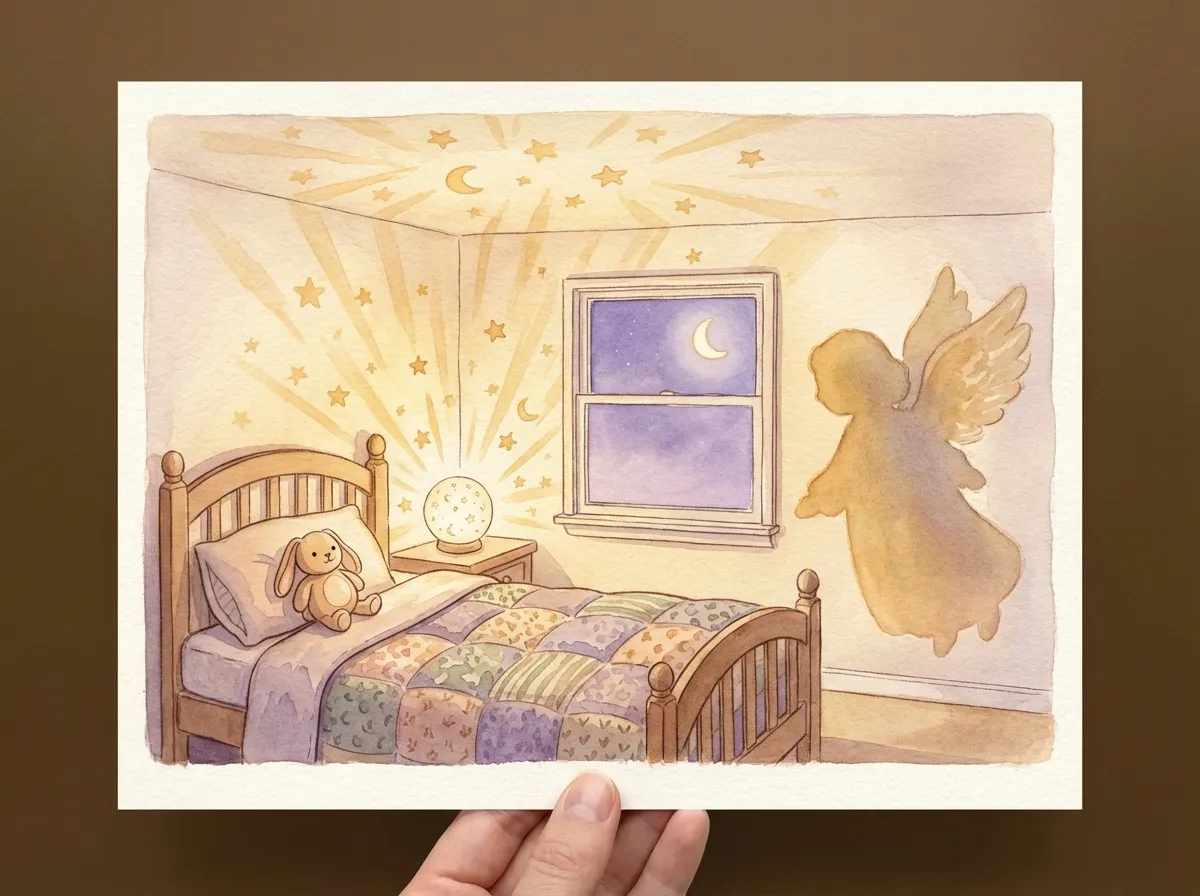
Making an anxious child sleep in pitch black to “toughen them up” just makes bedtime feel scarier. Nightlights, hall lights, and glow stars are all perfectly fine—they support independence, not undermine it.
Using bedtime as punishment
“If you do not behave, you are going to bed early” turns bedtime into a punishment instead of a safe wind-down. For an anxious child, this adds another layer of dread to a moment that is already hard.
Excessive reassurance on repeat
Answering the same scared question twenty times does not actually reassure your child. It teaches them that they need you to say it again to feel okay, which creates a cycle. Acknowledge the feeling once, then guide them to a coping tool they can use on their own.
Where Can Families Find More Support for Bedtime Anxiety?
Bedtime anxiety rarely shows up on its own. Understanding the bigger picture of your child's anxiety—and having strategies for the rest of the day—can make bedtime easier too.
Frequently Asked Questions
Common questions parents ask.
Replace Bedtime Battles with Bedtime Stories
Create a personalized story that helps your child face the dark with courage. Their name, their comfort objects, their version of brave.
Start Your Free Story