Anxiety in Children Ages 3\u20135: What It Looks Like and How to Help
Your preschooler cannot tell you \u201cI feel anxious.\u201d But their body can. Their behavior can. The stomachache before daycare, the meltdown at a birthday party, the desperate grip on your leg at drop-off\u2014these are not defiance. They are a small child\u2019s only vocabulary for fear. This guide will help you read what they are saying.
What You'll Learn
- Your preschooler feels anxiety with full force but cannot name it -- watch for body signals like stomachaches, clinginess, and going backward on skills they already had.
- Predictable routines are the single most powerful thing you can do at this age -- consistency is not boring to a preschooler, it is oxygen.
- Comfort objects are healthy coping tools, not crutches -- they are portable pieces of safety your child will put down when they are ready.
- Play and personalized stories are how preschoolers practice being brave -- it is the language their brains actually speak.
- Your calm is their calm: when you stay steady during their meltdown, you are lending them the part of your brain that manages big feelings until theirs grows in.
Why Is Anxiety in Children Ages 3–5 Easy to Miss?
Anxiety in a preschooler does not look like worry. Your three-year-old is not lying awake thinking about tomorrow -- they are clutching your leg at daycare drop-off or melting down at a birthday party. Their brain cannot name what is happening yet, but their body knows. Clinginess, tantrums, regression, stomachaches, and sleep refusal are how anxiety talks at this age.
Between ages three and five, your child's brain is doing something remarkable: building the wiring for emotional regulation. The part of the brain that manages fear and big feelings is still years away from being fully online. This means your preschooler feels anxiety with full force but has almost no ability to manage it, name it, or explain it to you.
Because of this, anxiety at this age rarely looks like what you would expect. There is no hand-wringing or verbal worrying. Instead, it comes out through the body and through behavior: clinginess, tantrums, going backward on skills they had mastered, physical complaints, and sometimes a sudden, fierce refusal to do things that used to be fine.
About 1 in 5 preschoolers deals with anxiety -- making it the most common emotional challenge in early childhood. Yet because preschool anxiety so often gets mislabeled as “being difficult” or “just a phase,” many of these kids go unsupported during the window when a little help makes the biggest difference.
The Three Core Fears of Ages 3–5
Preschool anxiety tends to cluster around three themes, all connected to the big job of this stage: figuring out that they are a separate person in a big world, and that you are not always going to be right there.
Separation Anxiety: “What if you don't come back?”
This is the most common form of anxiety in preschoolers. Your child clings at daycare drop-off, cries when you leave the room, or asks you again and again whether you will pick them up. Some kids develop elaborate rituals—needing to say goodbye in a specific way, or checking the window multiple times. Some separation anxiety is completely normal in toddlerhood, but when it sticks around past age four or gets worse instead of better, it is worth paying closer attention. Studies show that persistent separation anxiety in preschoolers can develop into broader anxiety later in childhood.
Fear of the Dark and the Unknown
Around age three, your child's imagination takes off—and that includes imagining things that scare them. The dark becomes frightening not because anything has happened in the dark, but because their brain can now fill it with monsters, strange sounds, and nameless dangers. This same leap in imagination is why they are suddenly afraid of costumed characters, new places, loud noises, and anything they cannot predict. What looks like a simple fear of the dark is actually your child's brain wrestling with a big new concept: not knowing what comes next.
New Situations and Loss of Routine
Preschoolers build their sense of safety on knowing what comes next. When the routine changes—a new babysitter, a different classroom, a family trip, or even you changing your work schedule—the ground shifts beneath them. You might see this as refusal to enter a new building, more tantrums during transitions, or a kid who was sleeping fine suddenly waking up multiple times a night. These are not behavior problems. They are your child's alarm system protesting the loss of its most important resource: predictability.
How the Body Speaks When Words Cannot
Here is something important to understand about preschool anxiety: it lives in the body. Your three-year-old is not thinking “I am worried about being left.” They feel a tightness in their stomach, a racing heart, a desperate need to hold on to you. At this age, the mind and body have not learned to separate yet, so when your child is anxious, they genuinely feel sick.
Physical signs
- Stomachaches and nausea, especially before stressful events
- Frequent headaches without medical explanation
- Muscle tension, stiffness, or complaints of “hurting”
- Changes in appetite—eating very little or seeking comfort food
- Toileting regression after being reliably trained
Behavioral signs
- Clinginess that intensifies rather than fading with reassurance
- Tantrums that seem disproportionate or come out of nowhere
- Regression to baby talk, thumb-sucking, or needing a bottle
- Refusal to enter new situations or meet new people
- Sleep disruptions—refusing bedtime, nightmares, night waking
Studies confirm what you probably already suspect: these physical complaints are not made up or attention-seeking. Your child's stress response triggers real changes in their body, and young children experience those changes as actual illness. When your preschooler says their tummy hurts before daycare, believe them. Then look deeper.
What Actually Helps at Ages 3–5
What works for preschoolers is different from what works for older kids. You cannot talk a three-year-old out of their fear, and strategies like “think about whether that worry is really true” are years away from making sense to them. What actually works at this age goes through the body, through routine, and through stories.
Anchor with routine and predictability
The single most powerful anxiety intervention for a preschooler is a predictable routine. Not rigid—predictable. When your child knows what comes next, their nervous system can relax. Create visual schedules using pictures. Preview transitions before they happen (“After lunch, Grandma will pick you up”). Use the same goodbye ritual at every drop-off. Consistency is not boring to a preschooler. It is oxygen.
Comfort objects as emotional bridges
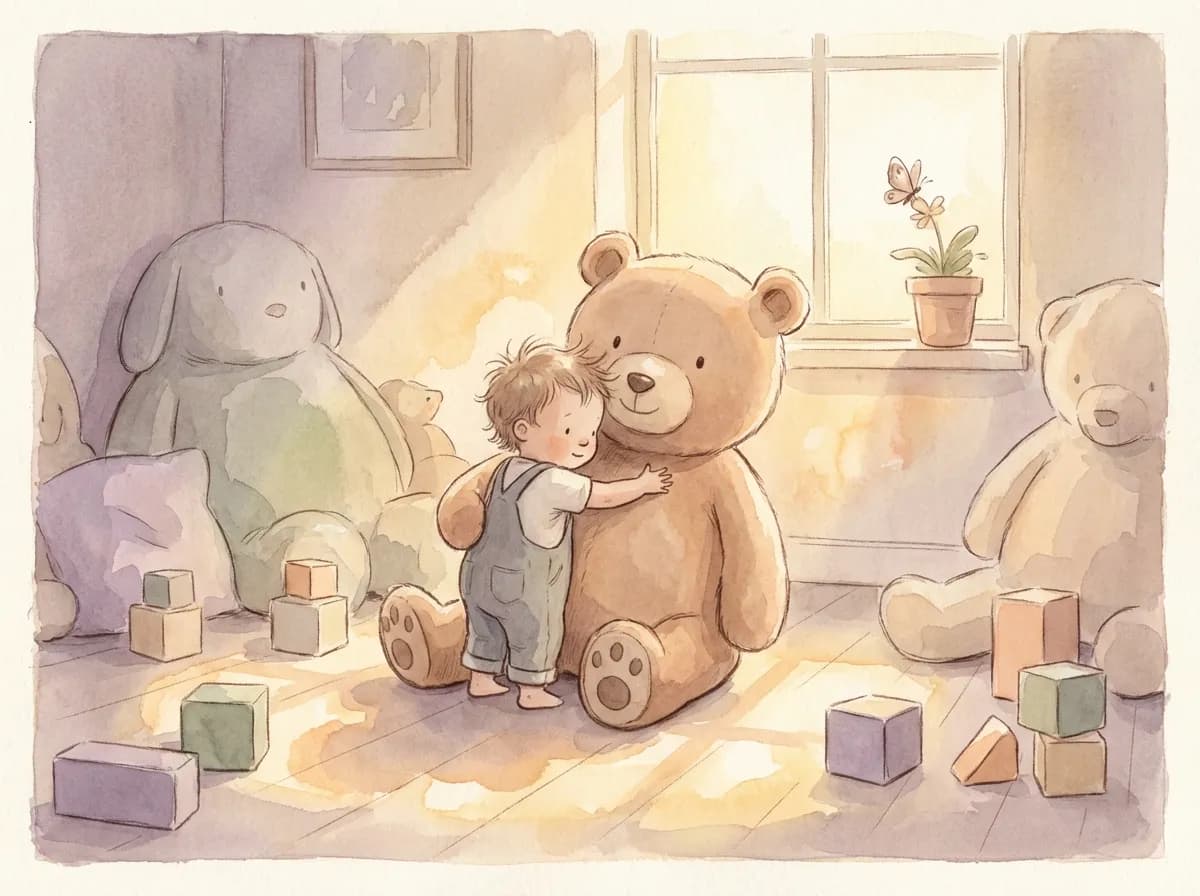
A beloved stuffed animal, a blanket, a parent's scarf—these are portable pieces of safety. When your child clutches their bear at preschool, they are carrying a piece of home into the unknown. This is not regression or dependency. It is a smart coping strategy. Let them bring their comfort object wherever they need it. They will put it down when they are ready (Winnicott, 1953; Passman & Halonen, 1979, The Journal of Genetic Psychology, DOI: 10.1080/00221325.1979.10534051).
Play-based processing
Play is how preschoolers process their world. If your child is anxious about going to the doctor, play doctor at home first. If drop-off is hard, play “going to school” with stuffed animals. Through play, your child rehearses frightening situations from a position of control and safety. This is not distraction. It is genuine emotional processing in the language their brain speaks best.
Stories that teach courage by example
At this age, kids learn almost everything through copying and stories. When your preschooler hears a story about a character who shares their name, their favorite toy, and their specific fear—and watches that character find courage—something clicks. They start to see themselves as someone who can be brave too. Studies on using stories with young children confirm that this approach can significantly reduce anxiety and fearful behaviors in preschoolers (Montgomery & Maunders, 2015, Children and Youth Services Review, DOI: 10.1016/j.childyouth.2015.05.010). This is the foundation of personalized storytelling for childhood anxiety.
Your calm is their calm
This might be the most important thing on this page: your child's nervous system takes its cues from yours. When you stay calm during their meltdown—not dismissive, but genuinely steady and present—you are lending them the part of your brain that manages big feelings until theirs grows in. A landmark study showed that when parents learned to stay warm but stop reorganizing life around their child's fears, outcomes were just as good as sending the child to therapy (Lebowitz et al., 2020, Journal of the American Academy of Child & Adolescent Psychiatry,DOI: 10.1016/j.jaac.2019.02.014).
When to Talk to Your Pediatrician
Some fear is completely normal at this age. Being scared of the dark, wary of strangers, and upset at goodbyes are all part of healthy development. But you should reach out for professional guidance when:
- Anxiety has persisted for more than four weeks without improvement
- Your child is unable to participate in age-appropriate activities (daycare, playdates, errands)
- Sleep is severely and consistently disrupted
- Regression is getting worse rather than improving (toilet training, speech, social skills)
- You find yourself increasingly reorganizing family life around your child's fears
Reaching out early is not overreacting. It is the same instinct that takes you to the doctor for a cough that will not go away. For a more detailed guide, see when to seek professional help for your child's anxiety.
Frequently Asked Questions
Common questions parents ask.
A Bedtime Story Built for Your Little One
Create a personalized story featuring your child's name, their comfort objects, and their specific fears. Designed for preschoolers, grounded in research, made for bedtime.
Start Your Free Story